





I SPOTTED the obituary for Madeleine L'Engle, who died last week at 88, and in my mind's eye I was 9 years old again, racing through A Wrinkle in Time
IT was a brain.
A disembodied brain. An oversized brain, just enough larger than normal to be completely revolting and terrifying. A living brain. A brain that pulsed and quivered, that seized and commanded. No wonder the brain was called IT. IT was the most horrible, the most repellent thing she had ever seen, far more nauseating than anything she had ever imagined with her conscious mind, or that had ever tormented her in her most terrible nightmares.
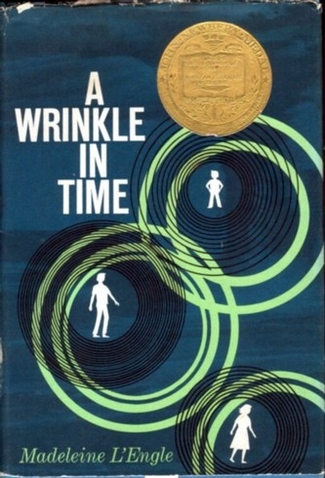
Long before J.K. Rowling transfixed millions of readers with Harry Potter's adventures at Hogwarts, Madeleine L'Engle was mesmerizing their parents with the saga of Meg and Charles Wallace and their friend Calvin O'Keefe, who journey across galaxies to find the Murrys' missing father. They reach him with the help of three mysterious old women - Mrs. Whatsit, Mrs. Who, and Mrs. Which - who are in fact not women at all, but the physical manifestation of stars that sacrificed themselves eons ago in battle with the Dark Thing, the evil force that since time immemorial has been trying to overpower the universe.
In The New Yorker a few years ago, the poet Cynthia Zarin observed that A Wrinkle in Time, which was published in 1962, has been variously described as science fiction, a Cold War allegory, a feminist landmark, a religious fable, a coming-of-age novel, and a work of pagan mysticism. But when she first read it as a child, Zarin remarked, "I was innocent of any of this."
So was I. I only knew that A Wrinkle in Time was a great read, and that compared with other works of children's fantasy I was devouring -- Edward Eager's droll tales 
Ironically, the book was rejected by more than 20 publishers before John Farrar of Farrar, Straus & Giroux, a friend of L'Engle's mother, happened to read the manuscript and loved it. There may be no single reason why so many publishers shied away from what would come to be seen, to quote John Podhoretz, as "possibly the best and most memorable young person's novel written in the United States since World War II." Perhaps what made them uneasy about A Wrinkle In Time was precisely what strikes me, all these years later, as so remarkable about it: its message of a universe threatened by evil, in which the greatest good is accomplished only by those prepared to swallow their fears and face the enemies of truth.
"Maybe it won't seem strange to you that some of our very best fighters have come right from your own planet," Mrs. Whatsit tells the children shortly before their hazardous trip to Camazotz.
Puzzled, Calvin asks: "Who have our fighters been?" Mrs. Who responds by quoting the gospel of John: "And the light shineth in darkness; and the darkness comprehended it not."
As a 9-year-old, I was thrilled and horrified by the giant disembodied brain. What speaks to me far more keenly today is L'Engle's message of light confronting the darkness. A Wrinkle In Time, she always insisted, was not a children's book. But sometimes the best way to reach adults with a difficult truth is through literature that appeals to children.
"Almost all of the best children's books do this," she said in her acceptance speech when A Wrinkle in Time
(Jeff Jacoby is a columnist for The Boston Globe).
-- ## --